Facebook & Instagram Ads for Home-Service Businesses: A 2026 Playbook
Quick answer: Facebook and Instagram ads work for home-service businesses when you lead with a concrete offer, show real before-and-after work, target a tight local radius, and respond to every lead within minutes. Paid social is demand generation - you are interrupting people who were not searching - so the creative and the offer do the heavy lifting, and instant follow-up turns the click into a booked job. Done right, it fills the gap between word-of-mouth and the slower payoff of SEO.
Published 2026-06-19 · Paid Ads · by AdForce
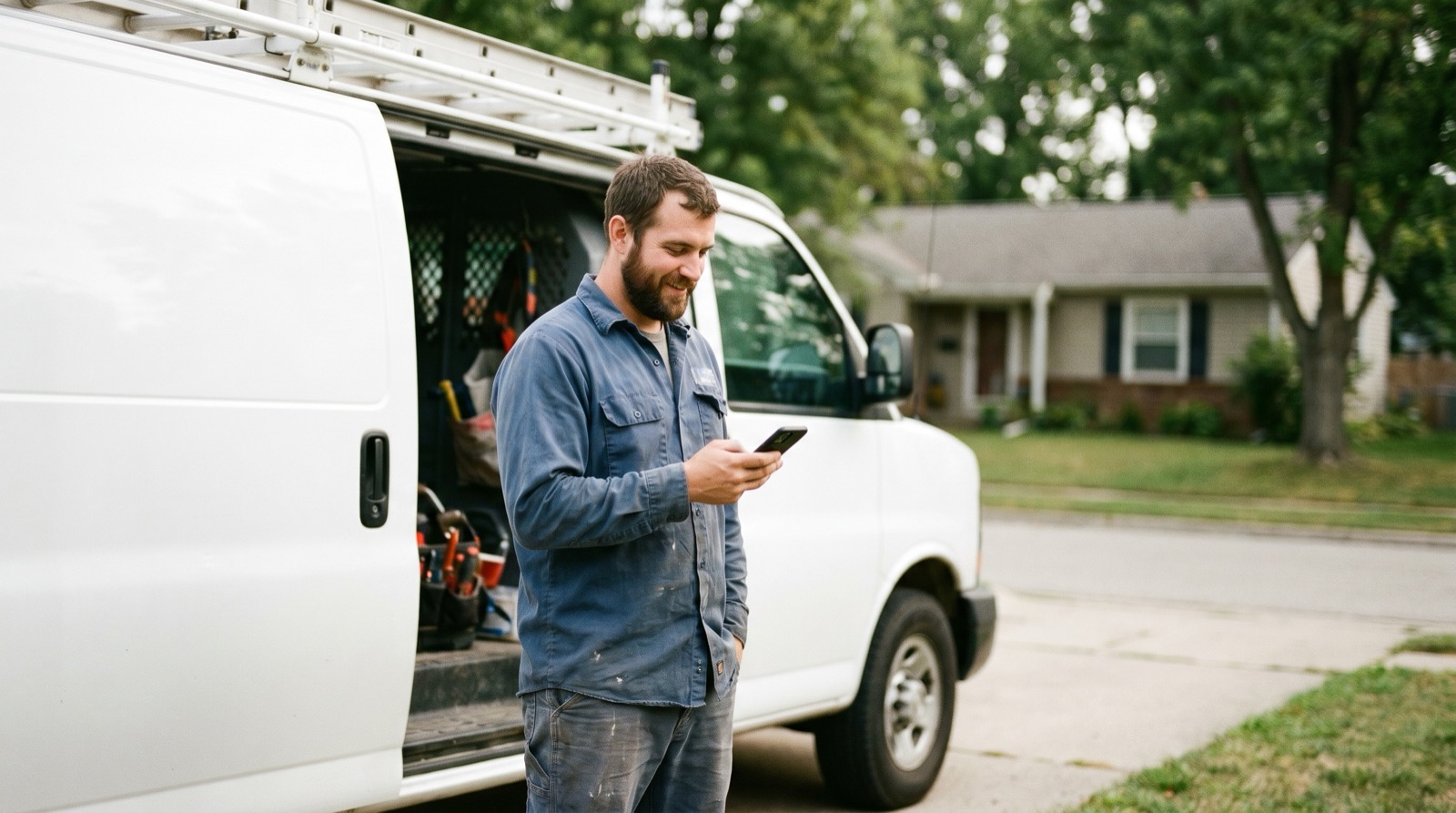
Most home-service owners have the same Facebook ads story: they boosted a post, got a handful of junk leads, and wrote off social as a place for cat videos, not contracts. Boosting a post is not advertising. Run properly, Facebook and Instagram are one of the most cost-effective ways for a local service business to create demand - especially for the visual trades where before-and-after photos sell themselves.
The key mental shift: paid social is demand generation, not demand capture. On Google, you catch people already searching for a plumber. On Facebook, you interrupt someone scrolling who did not wake up planning to remodel their kitchen - so your offer and your creative have to do the convincing. Here is the 2026 playbook.
Why paid social fits home services
Search (local SEO and Google Ads) only reaches people actively looking right now. Plenty of your future customers are not searching yet - but they will stop scrolling for a stunning bathroom transformation or a clear seasonal offer. Paid social lets you:
- Reach homeowners in your exact service area before they start shopping competitors.
- Show off visual work that builds trust instantly (the trades have a creative advantage here).
- Generate leads steadily while your slower-but-cheaper SEO foundation matures.
The offer: the most important thing on the page
Weak ads say "Quality remodeling, family owned, free estimates." Everyone says that. Strong ads make a specific, low-friction offer the viewer can act on now:
- "$500 off any kitchen remodel booked in June."
- "Free in-home design consultation - 6 spots left this month."
- "Chimney inspection and cleaning, $89, this week only."
A concrete offer with a reason to act now is the single biggest lever on your cost per lead. Test two or three offers before you touch anything else.
Creative that stops the scroll
For home services, the creative is usually the campaign. What works in 2026:
- Before-and-after photos and short videos - the highest-performing format for the trades, period.
- Real footage over stock. A 20-second clip shot on a phone at a real job site beats a polished stock ad. Authenticity converts.
- Native, not "ad-like." Content that looks like it belongs in the feed outperforms billboard-style graphics.
- Captions and a clear CTA - most feed video is watched on mute, so the message has to land silently.
Targeting: tight, local, simple
The biggest budget waste is showing ads outside your service area. Keep it disciplined:
- Geo-radius around your service area - and exclude anywhere you will not drive.
- Let the platform optimize. In 2026, broad targeting plus strong creative and a clean conversion signal usually beats narrow interest stacking - the algorithm finds your buyers if you feed it the right goal.
- Retarget site visitors and video viewers - they are your warmest and cheapest audience.
The make-or-break step: instant follow-up
Here is where most home-service ad budgets quietly die. The leads come in, the owner is on a job until 6pm, and by the time anyone calls back the homeowner has booked someone else. A paid-social lead is colder than a search lead to begin with - wait an hour and it is ice.
The fix is automation: an instant text-back the second a lead comes in, an AI agent or simple sequence to qualify and book, and a follow-up cadence for the ones who do not reply right away. This one change routinely doubles the booked jobs from the same ad spend. The full mechanism is in our AI marketing automation guide, and our AI business agents handle exactly this.
Real math: what to expect
Numbers vary by trade, market, and offer, but a healthy home-service funnel tends to look like this:
| Stage | What good looks like |
|---|---|
| Ad spend to start | $1,000 - $3,000 / month |
| Cost per lead | Lower than search, varies by offer and creative |
| Lead to booked job | Driven mostly by follow-up speed |
| Payback | One or two jobs usually covers the month |
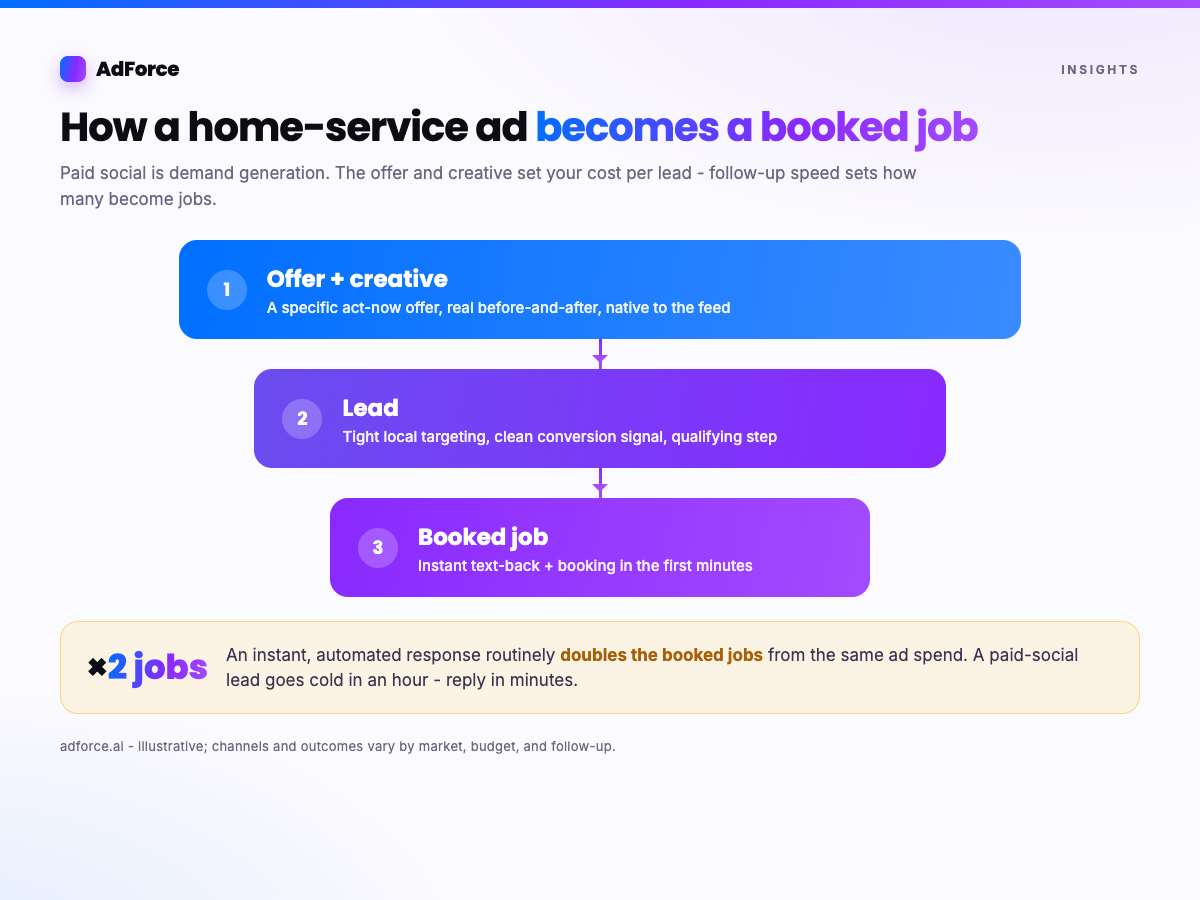
The mistake is judging a campaign on week one. Give the platform time to optimize, hold your follow-up to a five-minute standard, and read the results over 30 to 60 days. And read the result against your other channels on the same basis, which is what our ranking of lead generation channels for contractors does, because paid social looks expensive next to a lead count and reasonable next to a booked job.
The bottom line
- Treat paid social as demand generation - the offer and creative carry it.
- Lead with a specific, act-now offer, not generic "quality work" copy.
- Win with before-and-after, real, native creative built for sound-off feeds.
- Keep targeting tight and local, and let the algorithm optimize on a clean signal.
- Follow up in minutes - it is the difference between leads and booked jobs.
Want paid social that actually fills your calendar instead of your spam folder? Book a free call or see how we run ads and follow-up together.
Frequently asked questions
Do Facebook and Instagram ads work for home-service businesses?
Yes, when run properly. Paid social is demand generation - you reach homeowners before they start searching - so it works especially well for visual trades that can show before-and-after work. The offer, the creative, and fast follow-up determine whether it is profitable. Boosting a post is not the same as running real campaigns.
How much should a contractor spend on Facebook ads?
A common healthy starting range is $1,000 to $3,000 per month, enough for the platform to optimize and for you to test offers and creative. What matters more than the exact figure is follow-up speed - the same budget produces far more booked jobs when every lead gets an instant response.
What kind of ad creative works best for home services?
Before-and-after photos and short, real video shot at actual job sites. Authentic, native-looking content beats polished stock ads, and since most feed video is watched on mute, captions and a clear call-to-action are essential. The creative is usually the whole campaign for the trades.
Is Facebook or Google better for contractors?
They do different jobs. Google captures people already searching for your service; Facebook and Instagram generate demand among people who are not searching yet. Most home-service businesses benefit from both, plus a local SEO foundation, so they cover every stage of buyer intent.
Why am I getting junk leads from Facebook ads?
Usually because of a vague offer, loose targeting, or a form that is too easy to fill out without intent. Tightening the offer, excluding areas you will not serve, and adding a qualifying step or instant follow-up that filters out non-serious leads all raise lead quality quickly.
How fast do I need to respond to a Facebook lead?
Within minutes. Paid-social leads start colder than search leads because the person was not actively shopping, so they go cold fast. An automated instant text-back plus a booking sequence routinely doubles the booked jobs from the same ad spend.